
 Contact
Treatment Equipment
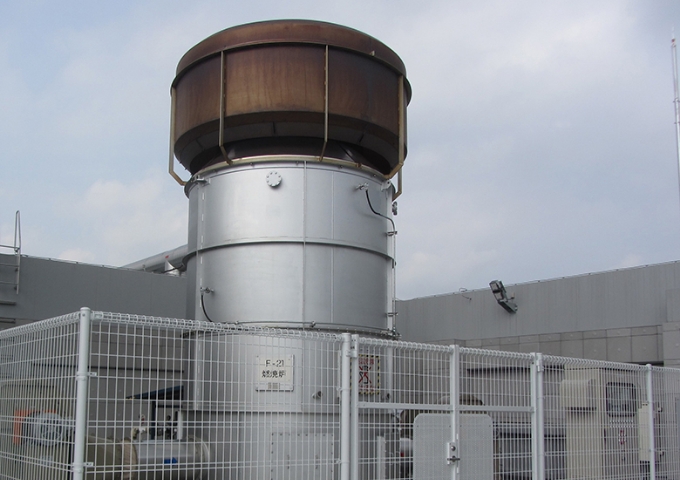
JFE Project One Co., Ltd. manufactures combustion-type exhaust gas treatment equipment for treatment of
smoke and odor gas generated by factories and other facilities and black smoke from fire drills, etc.
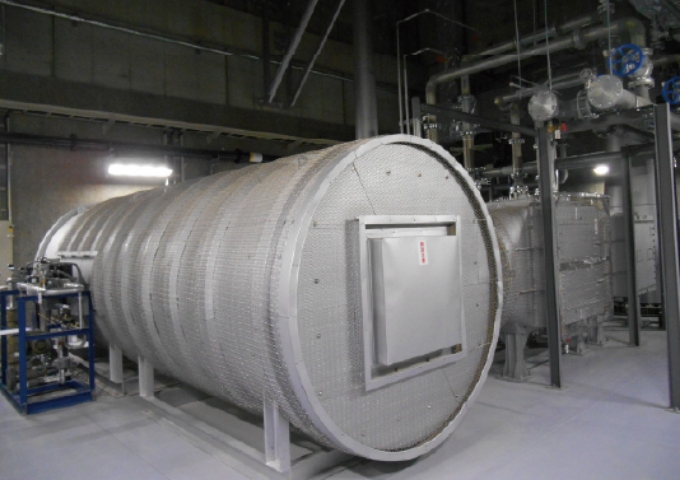
We also supply treatment equipment for foam fire-extinguishing wastewater containing
foam fire-extinguishing agents used in oil fires, etc.
Treatment equipment for factory exhaust gas
Treatment equipment which uses high-temperature secondary combustion to
detoxify/deodorize smoke and odor gases generated by factories, etc.
We can provide the optimum exhaust gas treatment process considering the composition of the gas
to be processed. Please feel free to consult with us!
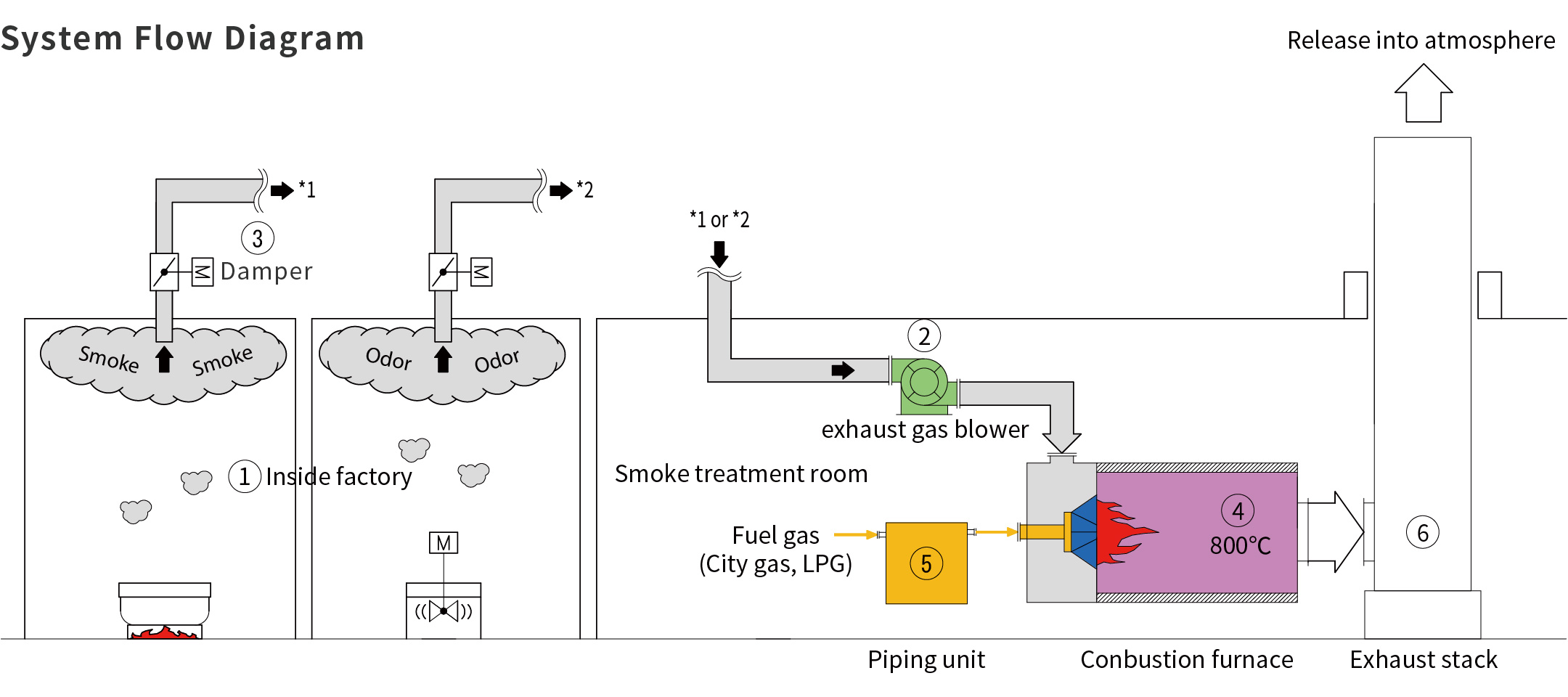
Example of application of exhaust gas treatment for factories, etc.
-
Inside factory (target gases)
- Wood combustion exhaust gas
- Oil combustion exhaust gas
- Solvent gases and other gases accompanied by fumes or odor
-
Exhaust gas blower
- Smoke or gases generated in factories can be led from the intake to the incinerator via ducts by suction by a exhaust gas blower.
-
Damper
- Suction volume is adjusted by opening/closing the damper, corresponding to the amount of generated smoke or gas.
-
Conbustion furnace
- Smoke or gas is cleaned by recombustion in the Conbustion furnace at 800 °C.
- As the Conbustion furnace fuel, the customer can select kerosene, city gas, LPG, etc.
-
Piping unit
- Flow rate of the fuel gas is adjusted/controlled to the amount necessary to maintain a temperature of 800 °C in the Conbustion furnace.
-
Exhaust stack
- Combustion exhaust gas is released into the atmosphere from the exhaust stack.
Delivery record
[Forestry and Forest Products Research Institute, Forest Research and
Management Organization, National Research and Development Agency]
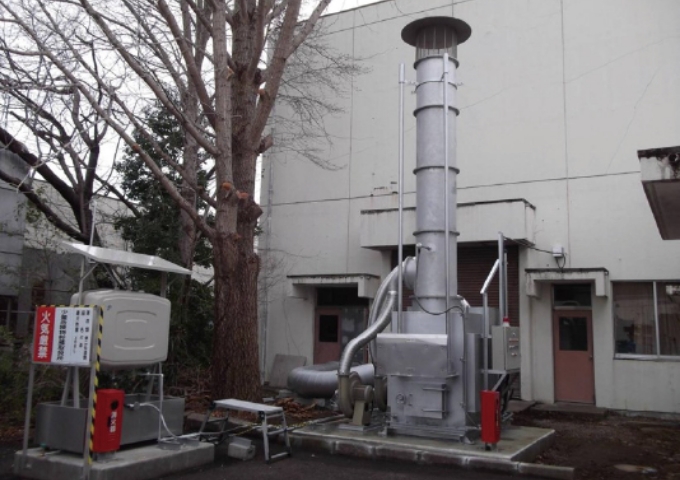
JFE Project One supplied exhaust gas treatment equipment for treatment of woody exhaust gas generated
by the existing test equipment at the Forestry and Forest Products Research Institute.
-
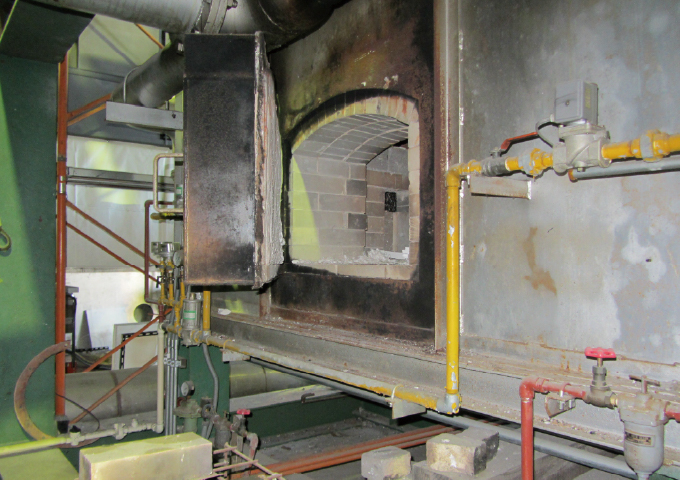
Existing test equipment
-
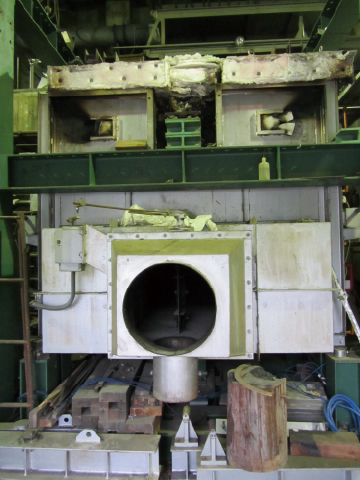
Target gas outlet
-

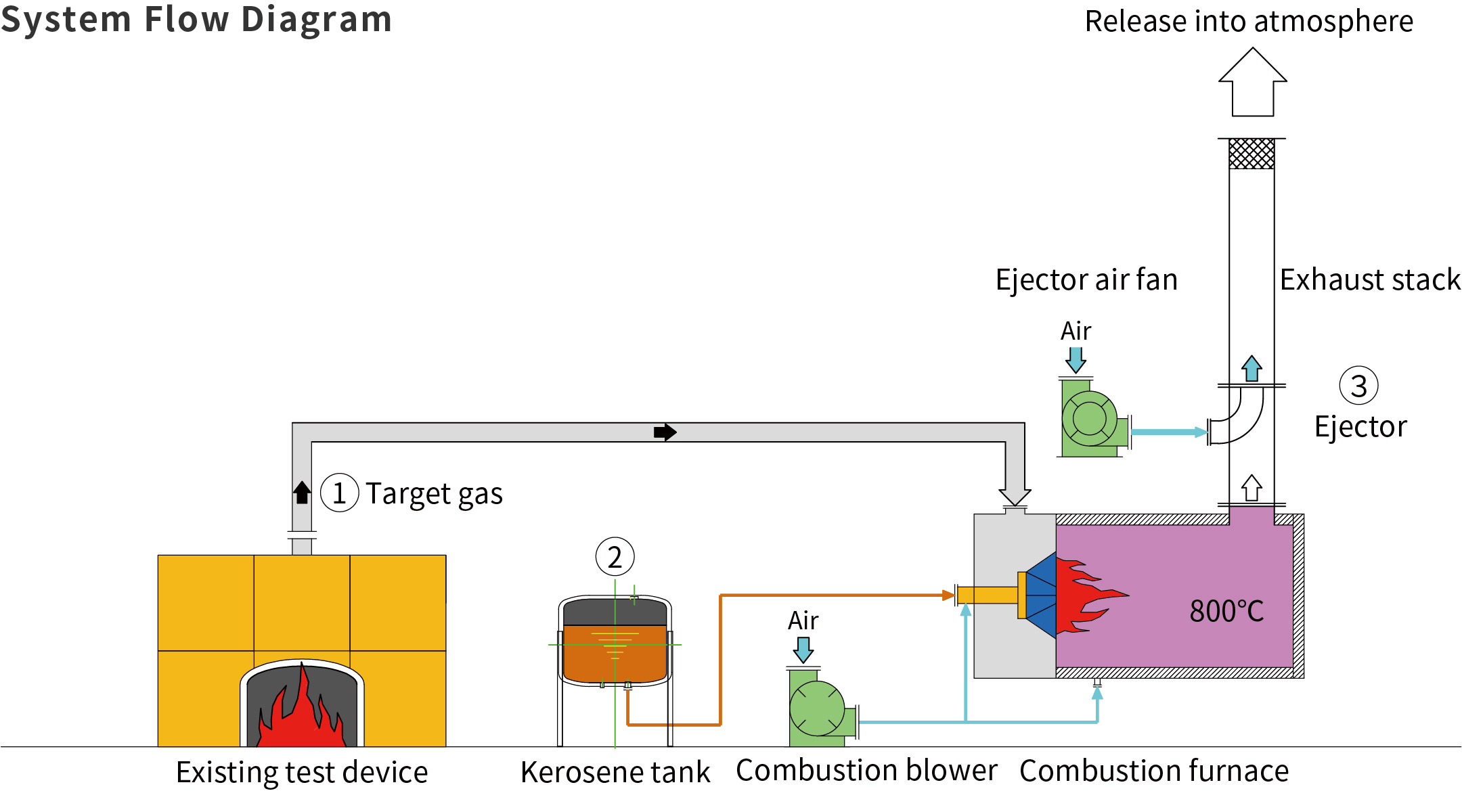
Combustion furnace
-
Target gas
- High-temperature wood combustion exhaust gas generated by the test equipment
-
Combustion furnace fuel
- Kerosene
-
Ejector
- Since the target gas is led to the combustion furnace by an induced draft system by an ejector, this specification also supports treatment of high-temperature gases.
[Mitsui Fudosan Technical Training Academy]
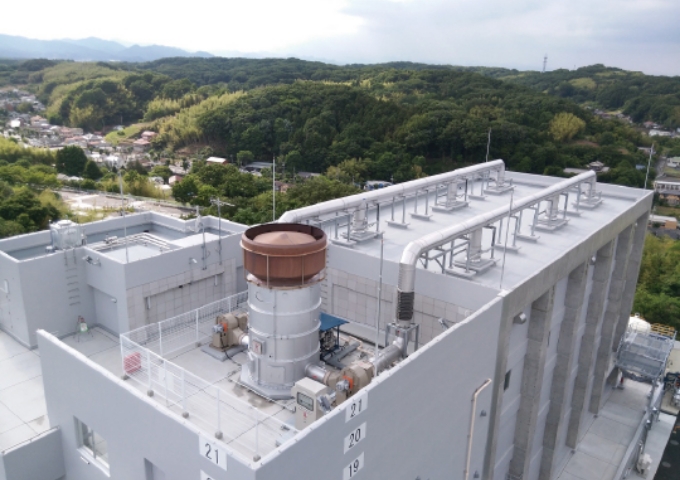
JFE Project One supplied exhaust gas treatment equipment to Mitsui Fudosan Co., Ltd.'s Technical Training Academy,
a leading domestic and international real estate company.
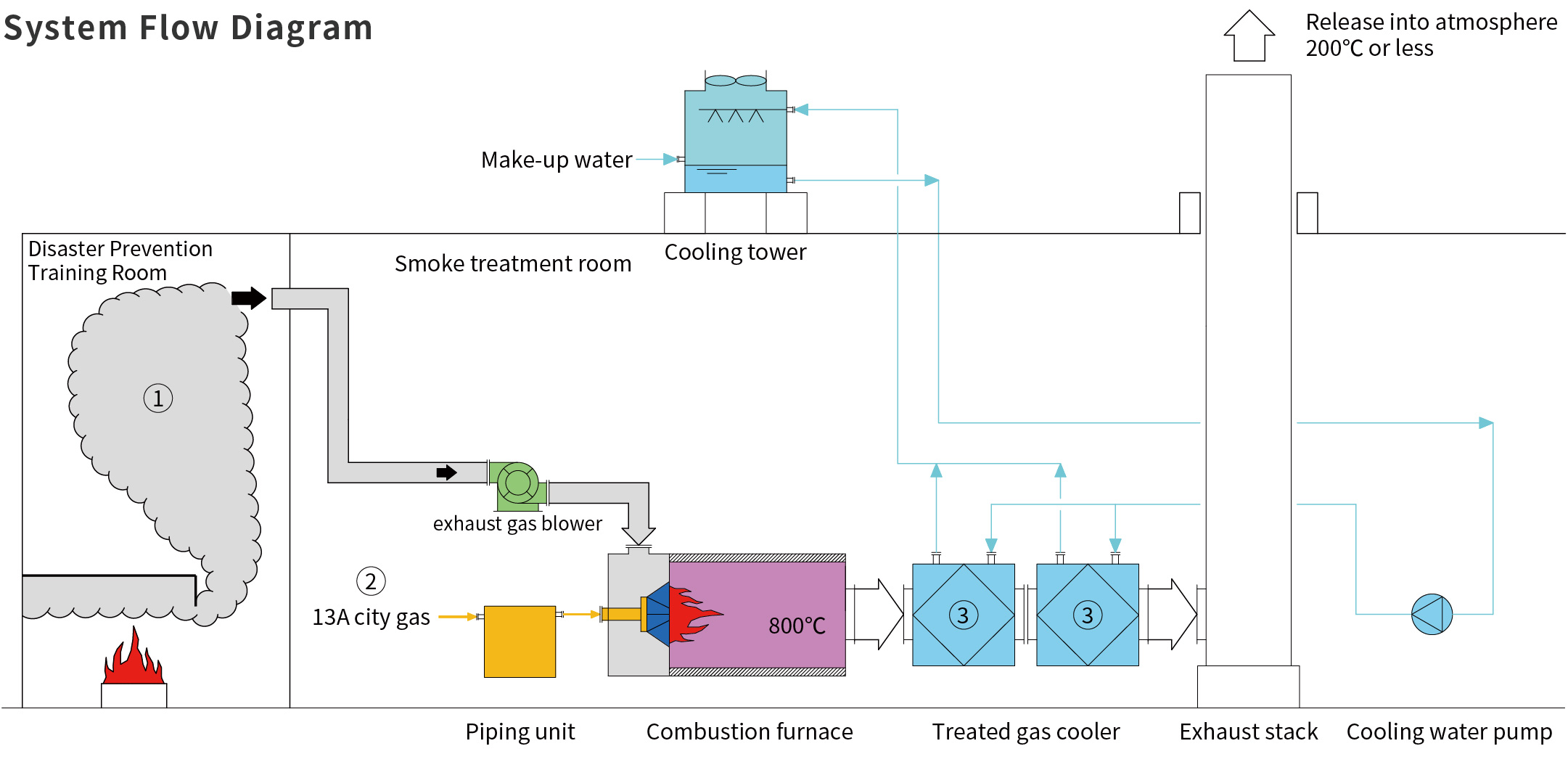
In order to understand for the building management staff to understand the danger of fires,
staff members observe the movement of "fire, smoke and heat" using actual fire,
and master the correct knowledge and operation of early stage fire-extinguishing activities.
Since this Academy is located near condominium buildings,
railways and main highways, the equipment is constructed so as to absolutely minimize emissions
of odor and white smoke when wood is burned.
-
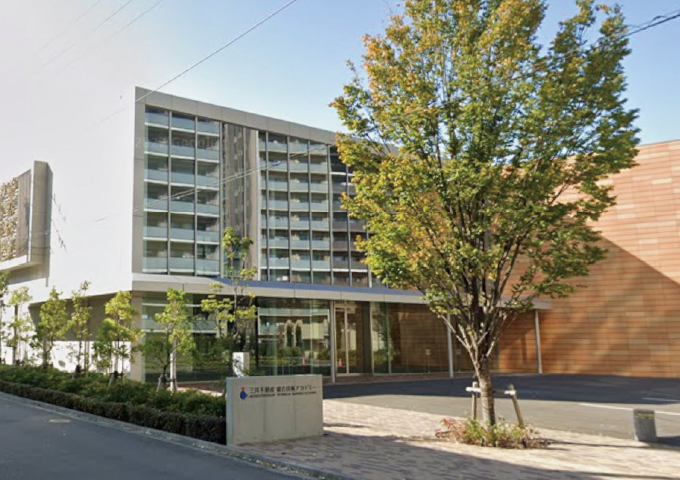
Mitsui Fudosan Technical
Training Academy -
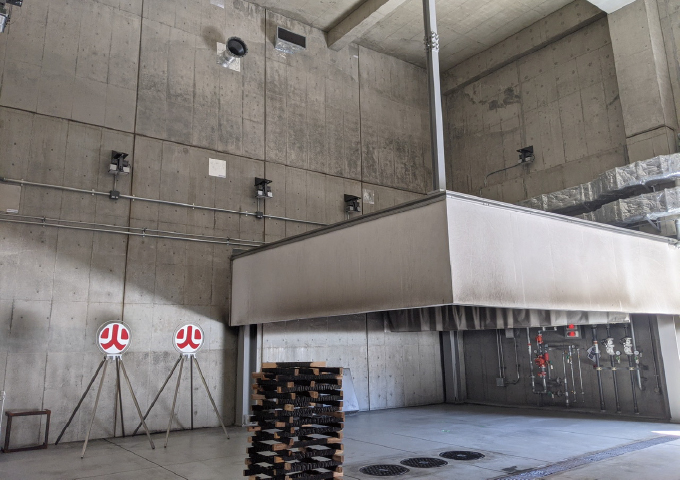
Disaster Prevention
Training Room -
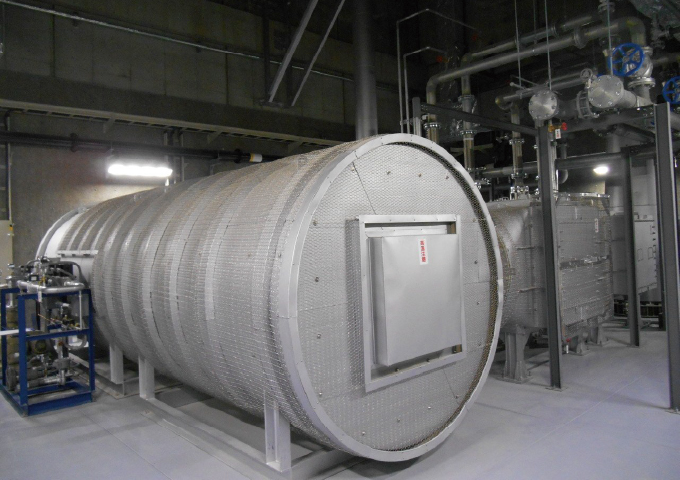
Combustion furnace
-
Target gas
- Exhaust gas of wood burned during training
-
Combustion furnace fuel
- 13A city gas
-
Treated gas cooler
- To prevent release of white smoke from the exhaust stack, the cleaned combustion exhaust gas (800 °C) is cooled to 200 °C or less using cooling water.
Equipment for Smoke Extraction and for Wastewater
Treatment in Firefighting Applications
We delivered smoke treatment equipment for handling black smoke from oil fires and other sources, along with foam firefighting wastewater treatment equipment for processing drainage generated during foam extinguishing training, to the mid‑rise training building at the Tokyo Fire Department's 9th District Headquarters Training Center. These installations are designed to enable firefighters to conduct firefighting training safely and efficiently.
[Tokyo Fire Department: Smoke Treatment Equipment]
-
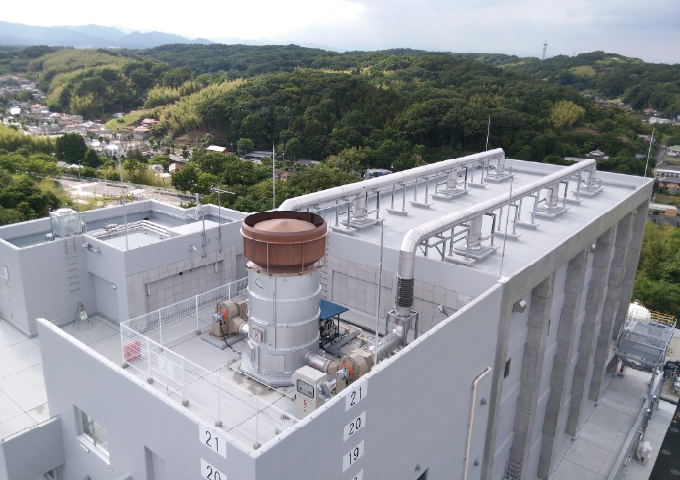
General view of Training Building
-
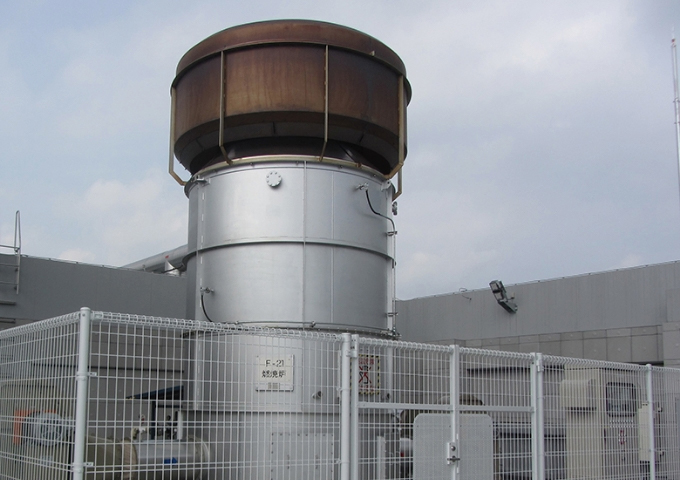
Conbustion furnace
-

LPG bulk supply facility
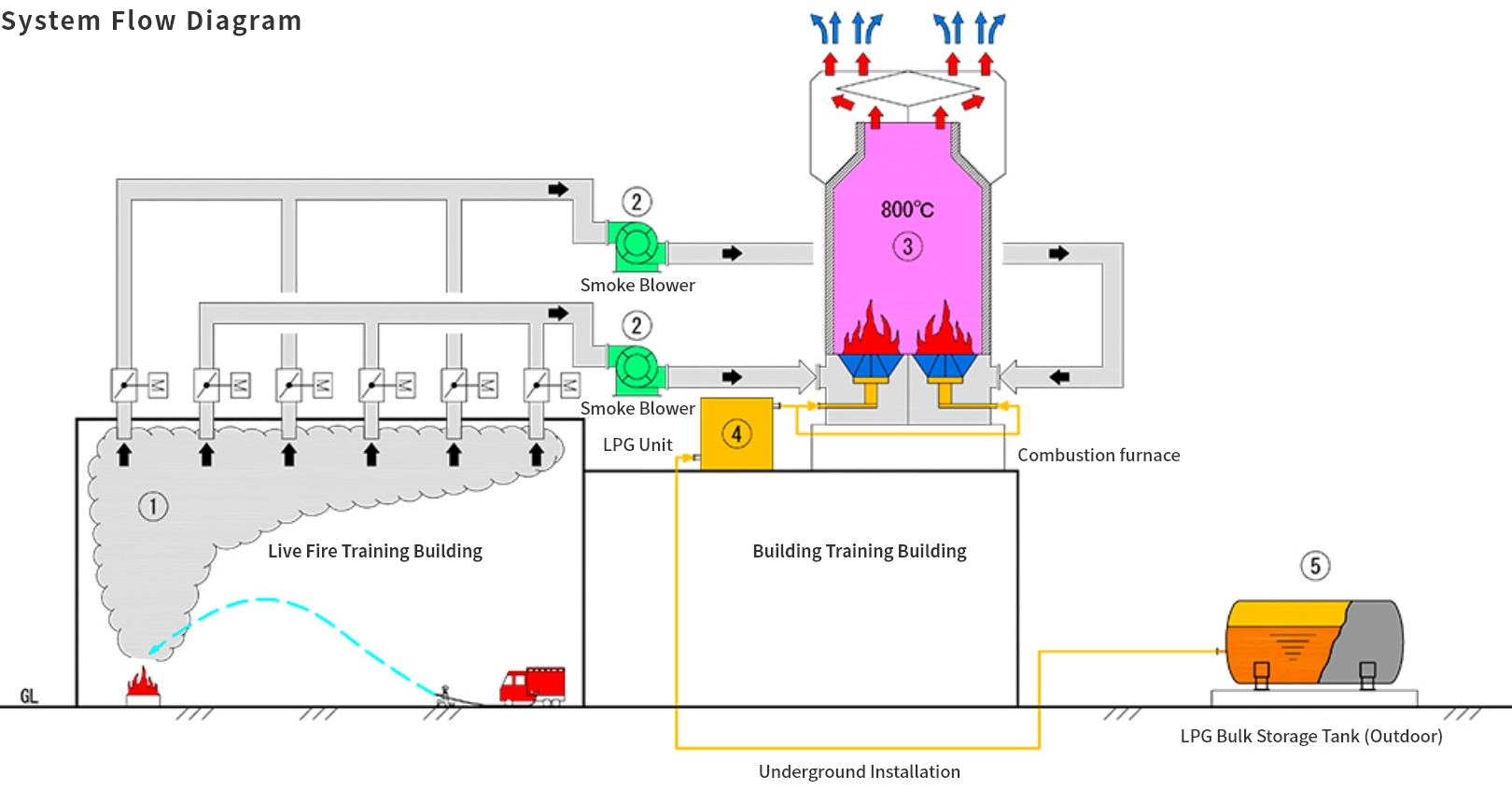
-
Real Fire Training Building
- Kerosene is burned in an oil pan, and firefighting training is conducted using protein foam fire extinguishing agents.
-
Exhaust Smoke Brower
- The combustion gases generated are drawn in through the training building's ceiling intake using ducts and a exhaust smoke blower, then directed to the combustion furnace.
-
Combustion Furnace
- The exhaust smoke is re-burned inside the combustion furnace at 800°C to clean it before being released into the atmosphere.
-
LPG Unit
- Controls the flow rate of LPG gas required to maintain the internal temperature of the combustion furnace at 800°C.
- As a safety device, an emergency shutoff valve (activated at a seismic intensity of 5 or higher) is installed internally.
-
LPG Bulk Storage Tank
- LPG is stored as fuel for the combustion furnace.
[Tokyo Fire Department: Treatment Equipment
for Foam Fire-Extinguishing Agent Wastewater]
-

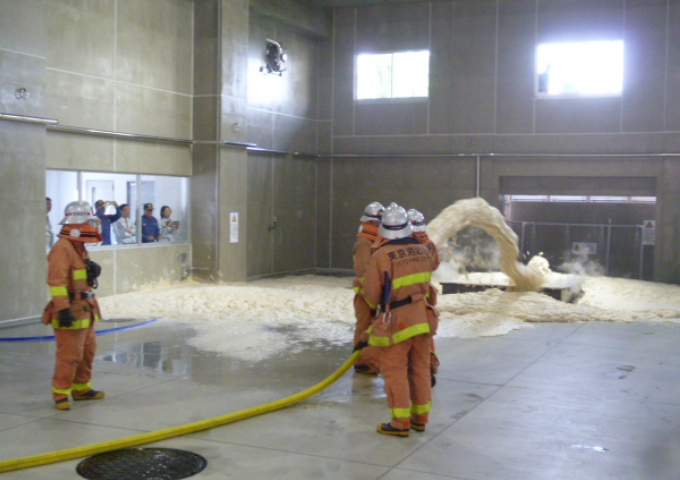
Oil Fire Training
-
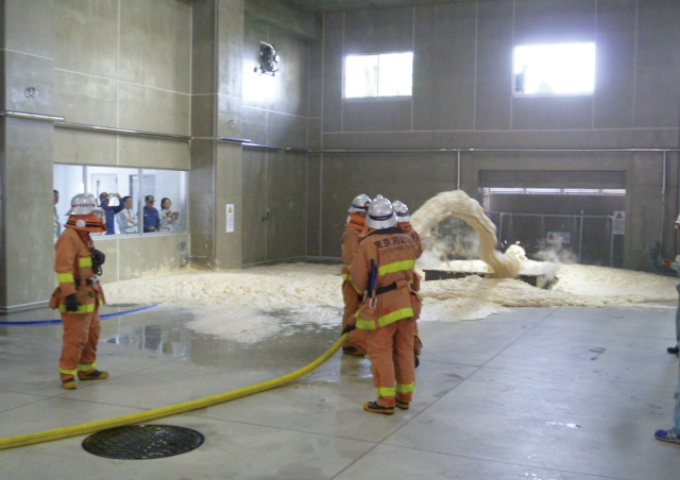
Foam fire-extinguishing agent effluent
-
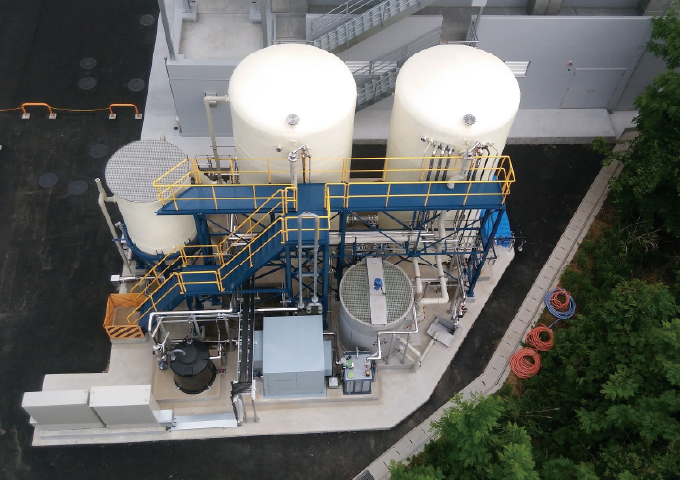
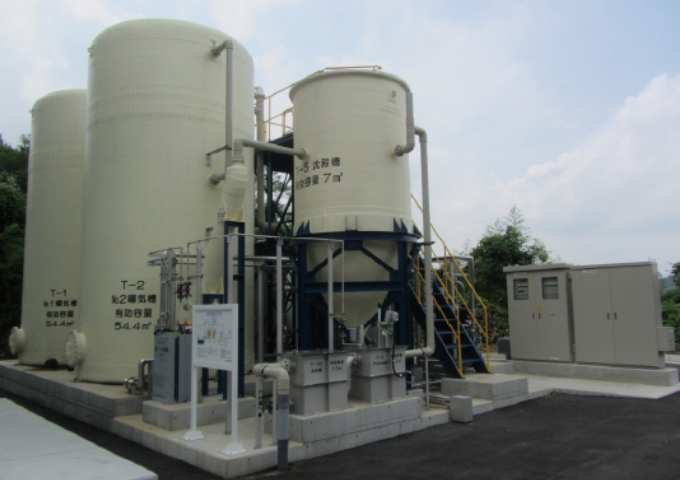
Treatment equipment for foam
fire-extinguishing wastewater
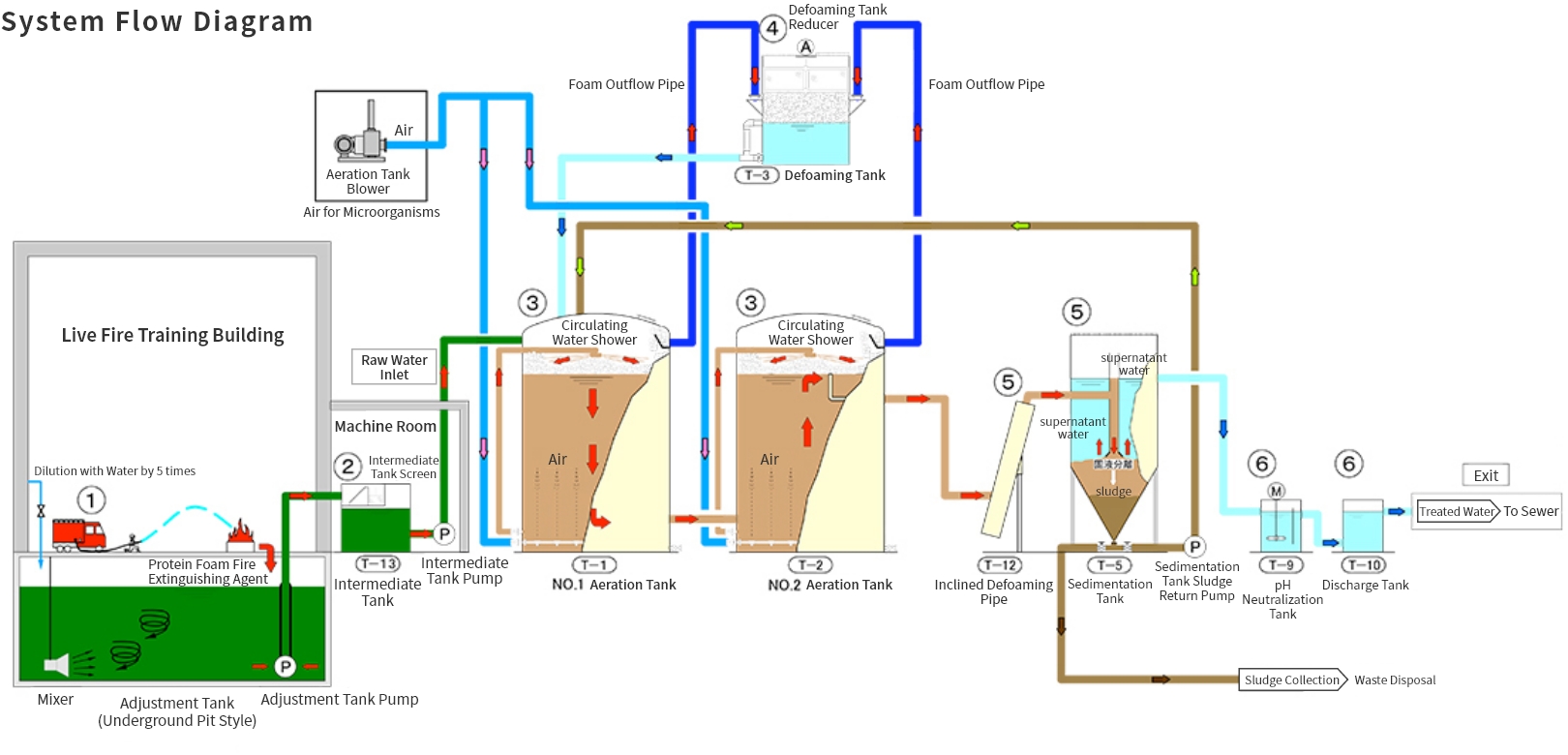
-
Underground Pit
- The protein foam fire extinguishing agent is diluted to 3% and used in firefighting training.
- The foam that lands on the floor is washed with tap water, diluted about five times, and flows into the underground pit.
- In the pit, it is uniformly stirred using a mixer and an adjustment tank pump.
-
Intermediate Tank
- The protein foam fire extinguishing wastewater stored in the underground pit is led to the intermediate tank screen, where large debris is removed.
- After removing large debris, the wastewater is introduced from the intermediate tank pump to the aeration tank.
-
Aeration Tank
- The protein foam fire extinguishing wastewater moved to No.1 Aeration Tank. begins to decompose by microorganisms.
The process is further enhanced by passing through No.2 Aeration Tank.
- The protein foam fire extinguishing wastewater moved to No.1 Aeration Tank. begins to decompose by microorganisms.
-
Defoaming Tank
- The bubbles generated in the aeration tank are led to the defoaming tank, where they are eliminated before being returned to the No.1 Aeration Tank.
The process is further enhanced by passing through aeration tank again.
- The bubbles generated in the aeration tank are led to the defoaming tank, where they are eliminated before being returned to the No.1 Aeration Tank.
-
Inclined Defoaming Pipe, Sedimentation Tank
- The treated water decomposed by microorganisms in the aeration tank, along with some sludge, is led to the inclined defoaming pipe to separate into treated water and bubbles.
- Then, it is introduced into the sedimentation tank, where it separates into supernatant and settled sludge.
- The settled sludge is returned to the aeration tank.
The sludge is checked during regular inspections, and excess sludge is extracted and treated as industrial waste.
-
pH Neutralization Tank, Discharge Tank
- The separated supernatant is neutralized in the pH neutralization tank with caustic soda, then discharged into the sewer system via the discharge tank.